Japan has long held top positions in the list of countries with the highest life expectancy in the world. Okinawa, one of its regions, is even known as a Blue Zone; an area where residents live longer and healthier than the global average. Of course, this fact is not a coincidence.
Interestingly, the secret to Japanese longevity is not about a single magic habit or one type of superfood.
The Japanese lifestyle is the result of interconnected philosophies such as how they eat, move, rest, and find meaning in life; everything works together as a cohesive whole, rather than isolated activities.
This article will introduce you to several Japanese lifestyle philosophies that can serve as inspiration for taking care of your physical and mental health, without having to completely overhaul your daily routine.
Check out the discussion below.
Also Read: Japanese Self Care Rituals That Help the Body Feel Calmer Amid a Busy Lifestyle
Japanese Philosophies Focused on Wellness
What distinguishes the Japanese approach from modern wellness trends is its focus on small habits practiced consistently, rather than drastic, large-scale changes that are hard to maintain.
Below are some of its core concepts:
1. Ikigai: Finding a Reason to Wake Up Every Morning
Literally, ikigai means “reason for being” or “reason to live.” The concept is not about finding one grand calling that changes the world, but rather about realizing the small things that make your everyday life feel meaningful. It could be a hobby, closeness to family, enjoyable work, or even simple habits like taking care of plants.
A review of 86 studies showed that people who have ikigai tend to report lower levels of depression, higher life satisfaction, and a smaller risk of premature death.
This means mental health is not just about eliminating negative things, but also about having something positive to look forward to every day.
2. Shinrin-yoku: Using Nature as Medicine
Shinrin-yoku or “forest bathing” is the practice of spending time in natural environments mindfully, not just taking a casual walk.
You don’t need to climb a mountain. Simply being in a green park while paying attention to the sound of leaves, the scent of damp soil, and the light filtering through the trees is enough.
This practice was developed as a public health program in Japan in the 1980s. Since then, various studies have backed its benefits: decreased cortisol levels, improved blood pressure, and increased immune function for those who do it routinely.
Amidst a highly stimulating urban life, shinrin-yoku offers a pause for the senses that is hard to find indoors.
3. Hara Hachi Bu: Eating Until 80% Full
This Okinawan principle teaches you to stop eating before your stomach feels completely full. The focus is not on calorie counting, but on being mindful of your body’s signals.
By eating slowly and stopping when you feel satisfied (not stuffed), the digestive system works more efficiently, and the risk of overeating is reduced.
This principle aligns with the broader Japanese philosophy of valuing sufficiency over excess. In the context of health, hara hachi bu is a form of mindful eating that had been practiced long before the term became popular in the Western world.
4. Kaizen: Consistent Small Improvements
Kaizen means “change for the better” or continuous improvement. The philosophy emphasizes gradual refinement, not sudden transformation.
In the context of health, you can start with simple steps, like adding a 10-minute walk every day, cutting out one cup of coffee, or sleeping 15 minutes earlier.
This approach is highly relevant because overly ambitious grand targets often fail to last. Kaizen reminds us that consistency in small things, week by week, actually yields much bigger results than massive efforts that only last a few days.
5. Bathing Culture: Soaking as a Daily Ritual
In Japan, soaking in warm water, whether at home (ofuro) or in a public bathhouse (onsen or sento), is not just a matter of hygiene. This activity serves as a daily ritual to release tension and mark the transition from an active day to a restful night.
Japanese-style soaking also has distinct stages: the body is cleansed first, and then you soak in warm water without soap, purely for relaxation.
This habit promotes health through two pathways: thermal effects like blood vessel dilation and the activation of the parasympathetic nervous system, as well as its ritualistic aspect that brings structure to your evening routine.
Start Small, Do It Every Day
Ultimately, all these Japanese life philosophies boil down to the same message: small habits practiced every day are far more meaningful than massive efforts made only occasionally.
Ikigai does not demand you find a perfect life purpose. Hara hachi bu is not about a strict diet. Kaizen is not a call to completely change everything.
It all comes back to simple steps; being a little better, a little more mindful, and a little more consistent from day to day.
Also Read: The Difference Between Onsen, Ofuro, and Sento in Japanese Culture
Experience the Touch of Japanese Wellness at Onsei
Onsei brings one of the key elements of the Japanese lifestyle, bathing culture and therapeutic touch, in a format you can easily access in Jakarta.
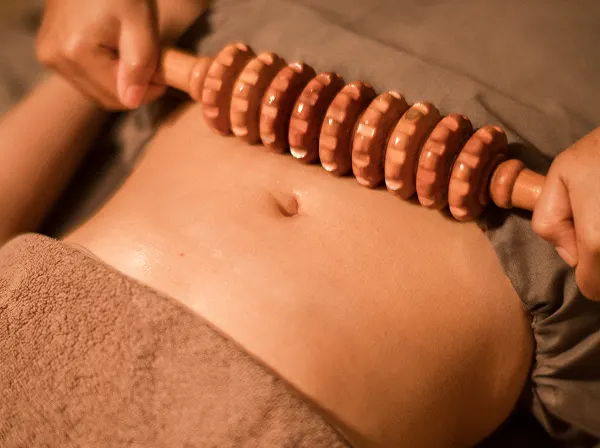
For instance, the Japanese Lymphatic Drainage is a treatment inspired by Japanese-style lymphatic drainage techniques, designed to smoothen lymph flow and support the body’s natural detoxification process.
With a duration of 60 minutes, Japanese Lymphatic Drainage can be the perfect complement for those who want to start applying the kaizen philosophy to body care.
Interested in trying it? Visit Onsei in Tebet, Bintaro, or Gading Serpong. Open every day from 08:00 AM to 10:00 PM.
References
- Ijeaku, I., Zare, A., Egu, O., Chukwueke, I., & Onwuzulike, O. (2025). Exploring the Effects of Ikigai on Mental, Physical, and Social Health: A Scoping Review. Lifestyle Medicine, 6, e70018.
- Li, Q. (2010). Effect of forest bathing trips on human immune function. Environmental Health and Preventive Medicine, 15(1), 9–17.