After a full day of work or an intense exercise session, soreness and stiffness tend to show up in the shoulders, lower back, or leg muscles. Most people deal with it by simply resting or reaching for a painkiller.
But there is another approach, one that has actually been used for centuries across various cultures: soaking in warm water.
The question is, can soaking in warm water at an onsen genuinely help reduce muscle soreness, or does it only provide a temporary sensation of comfort?
The answer lies in how your body responds to heat. Here is the full explanation.
Also Read: Morning Onsen vs Evening Onsen: Which Is Better?
Why Does Your Body Feel Sore?
Before exploring the role of an onsen, it is important to understand what is actually happening when the body feels sore.
Muscle soreness can arise for several reasons, and each one has a slightly different path to recovery.
1. Soreness from Physical Activity
After exercising or performing physical activity that is more demanding than usual, muscles can develop micro-tears in their fibres. This kind of damage is perfectly normal and is, in fact, part of how the body builds muscle strength.
However, these micro-tears can trigger a mild inflammatory response that produces pain and stiffness, typically appearing 24 to 72 hours after the activity. In the fitness world, this condition is known as Delayed Onset Muscle Soreness (DOMS).
2. Soreness from Posture and Daily Tension
Not all soreness comes from exercise.
Sitting in the same position for hours, typing without breaks, hunching over a phone screen, even cleaning the house can cause certain muscles to contract continuously without getting a chance to relax.
The areas most commonly affected are the neck, shoulders, upper back, and lower back. This type of soreness is chronic in nature and often does not go away with a single night’s sleep.
How the Thermal Mechanism of an Onsen Helps Relieve Soreness
The warm water in an onsen works through a different pathway from techniques like massage or reflexology, which rely on applied pressure at specific points on the body.
The primary mechanism of an onsen is thermal: it uses water temperature to trigger physiological responses that help reduce soreness.
1. Increased Blood Circulation to Tense Muscles
When the body is immersed in warm water at approximately 33°C to 40°C, blood vessels gradually widen (vasodilation). This widening increases blood flow to muscle tissue that is experiencing tension or undergoing recovery.
Blood carries the oxygen and nutrients needed for the repair process, while simultaneously flushing out metabolic waste products such as lactic acid that contribute to the feeling of soreness.
This process differs from massage or reflexology, which work mechanically on muscle tissue or specific pressure points. Warm water soaking triggers a response from within through the circulatory system, so its effect spreads more evenly across the entire body rather than being limited to the areas that receive direct contact.
If you are experiencing soreness in multiple areas at once (for example, the shoulders, back, and calves simultaneously), soaking in warm water can be a more efficient solution than treatments that target one area at a time.
2. Softening of Connective Tissue and Muscles
The warmth of the water also affects collagen in connective tissue. As tissue temperature rises, collagen becomes more elastic, which means muscles and tendons are no longer as rigid as before.
Synovial fluid in the joints also becomes less viscous, making movement feel lighter. This relaxation effect is especially noticeable for those whose soreness stems from poor posture, since chronic tension often involves stiffness in connective tissue, not just the muscles themselves.
3. Interruption of Pain Signals
Warm water also activates temperature receptors in the skin, which send sensory signals to the brain faster than pain signals from sore muscles.
This mechanism, known as the pain gate effect, causes the brain to prioritise the sensation of warmth while gradually easing the feeling of soreness.
This is why discomfort in the shoulders or back often feels noticeably reduced almost as soon as the body enters warm water.
How Long Should You Soak to Reduce Soreness?
The recommended duration for a warm water soak is 10 to 20 minutes per session. Beyond that, the body may experience an excessive drop in blood pressure or dehydration from sweating.
For soreness that recurs regularly due to daily activities, soaking on a consistent basis (two to three times per week) can deliver more reliable benefits than a single extended session.
After soaking, let the body cool down naturally and do some light stretching while the muscles are still supple. The gradual drop in body temperature after soaking can help preserve the flexibility gained during the session.
Also Read: What to Prepare Before Soaking in an Onsen
Relieve Soreness with the Onsei Bamboo Ritual
If you are interested in combining the benefits of warm water with direct pressure on tense muscles, the Onsei Bamboo Ritual at Onsei could be the right fit.
This ritual combines the Bamboo Shiatsu Massage with the Signature Onsen Bath in a single 120-minute sequence.
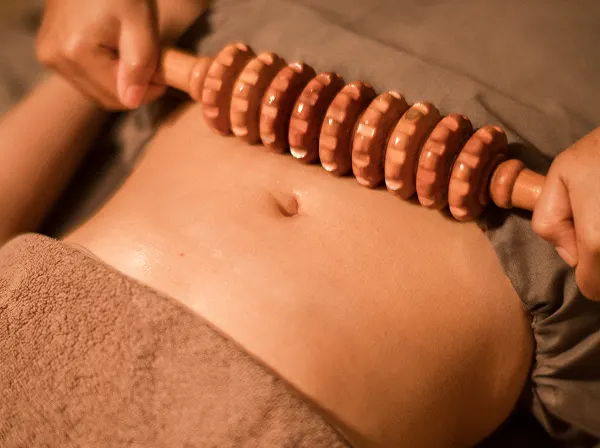
The Bamboo Shiatsu Massage uses bamboo pressure to reach deeper layers of muscle, while the Signature Onsen Bath soaking session delivers a thermal effect that extends the muscle relaxation achieved during the massage.
When both treatments are performed in sequence, their effects reinforce one another, helping to reduce soreness in a more thorough way.
Want to give it a try? Book your visit to Onsei in Tebet, Bintaro, or Gading Serpong through this link.